From Classroom to Riverbank: Joaquim’s IBFC Internship
We were delighted to host Joaquim Aguiar for a four-week internship at the Institute for Biodiversity and Freshwater Conservation (IBFC) at UHI Inverness. Joaquim is in the final year of his Environmental Science degree at University of the Highlands and Islands (UHI), where his studies have focused on biodiversity conservation, ecological monitoring, and environmental assessment, with a particular interest in applying GIS and field-based research to study species distribution and environmental change.
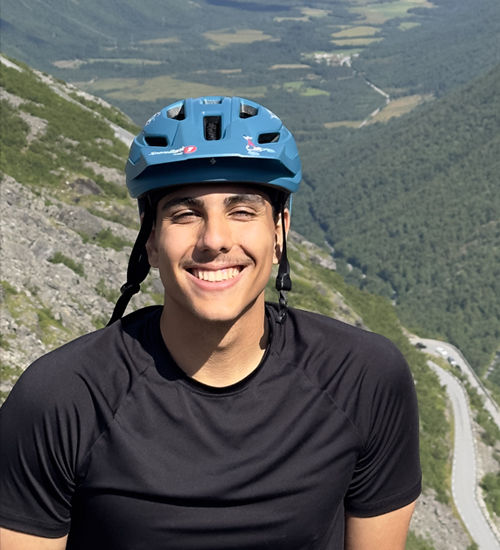
During his time with us, Joaquim contributed to our ongoing research on the American signal crayfish (Pacifastacus leniusculus), an invasive species of growing concern in Scotland. His work focused on verifying the species’ presence in several eastern catchment areas through digital PCR analysis of environmental DNA (eDNA) samples. Joaquim was involved in preparing and running reactions, managing contamination controls, and interpreting results to identify positive detections.
In addition to his laboratory work, Joaquim participated in field sampling across the Highlands, collecting biofilm samples from rivers. This experience offered him valuable insight into field operations, including water filtration methods and sample preparation for molecular analysis.
Joaquim described the fieldwork:
“An incredibly informative and rewarding experience that gave me new practical skills and confidence in outdoor data collection.”
Before joining the IBFC, Joaquim had limited experience with freshwater environments. Over the course of the internship, he gained extensive knowledge of freshwater ecosystems, sampling techniques and environmental monitoring, which he now hopes to build upon in future research and conservation projects.
Joaquim was drawn to the IBFC because of its strong emphasis on applied ecology and real-world conservation research.
“I wanted to gain hands-on experience in a professional setting and contribute to meaningful conservation work that addresses real environmental challenges.”
Reflecting on his experience, Joaquim said:
“This internship gave me valuable experience in both laboratory and field techniques, and deepened my understanding of ecosystems and invasive species management. Working alongside scientists whose careers I’ve long admired was incredibly inspiring. Everyone was welcoming, supportive, and eager to teach — it was the best experience I could have hoped for, and it has strengthened my motivation to pursue a career in this field.”
Joaquim extends his heartfelt thanks to Charley, Nathan and Bernd for their guidance and mentorship throughout his internship.
“Their time, patience, and willingness to share their knowledge made this experience truly exceptional. I am deeply grateful for all they have done to help me learn and grow as an aspiring environmental scientist.”