Making Waves in Freshwater Science: James Macarthur Graduates with PhD
The Institute for Biodiversity and Freshwater Conservation at UHI Inverness is delighted to congratulate James A Macarthur on graduating with his PhD, marking an exciting milestone in his research career and recognising his contribution to freshwater biodiversity and conservation science.
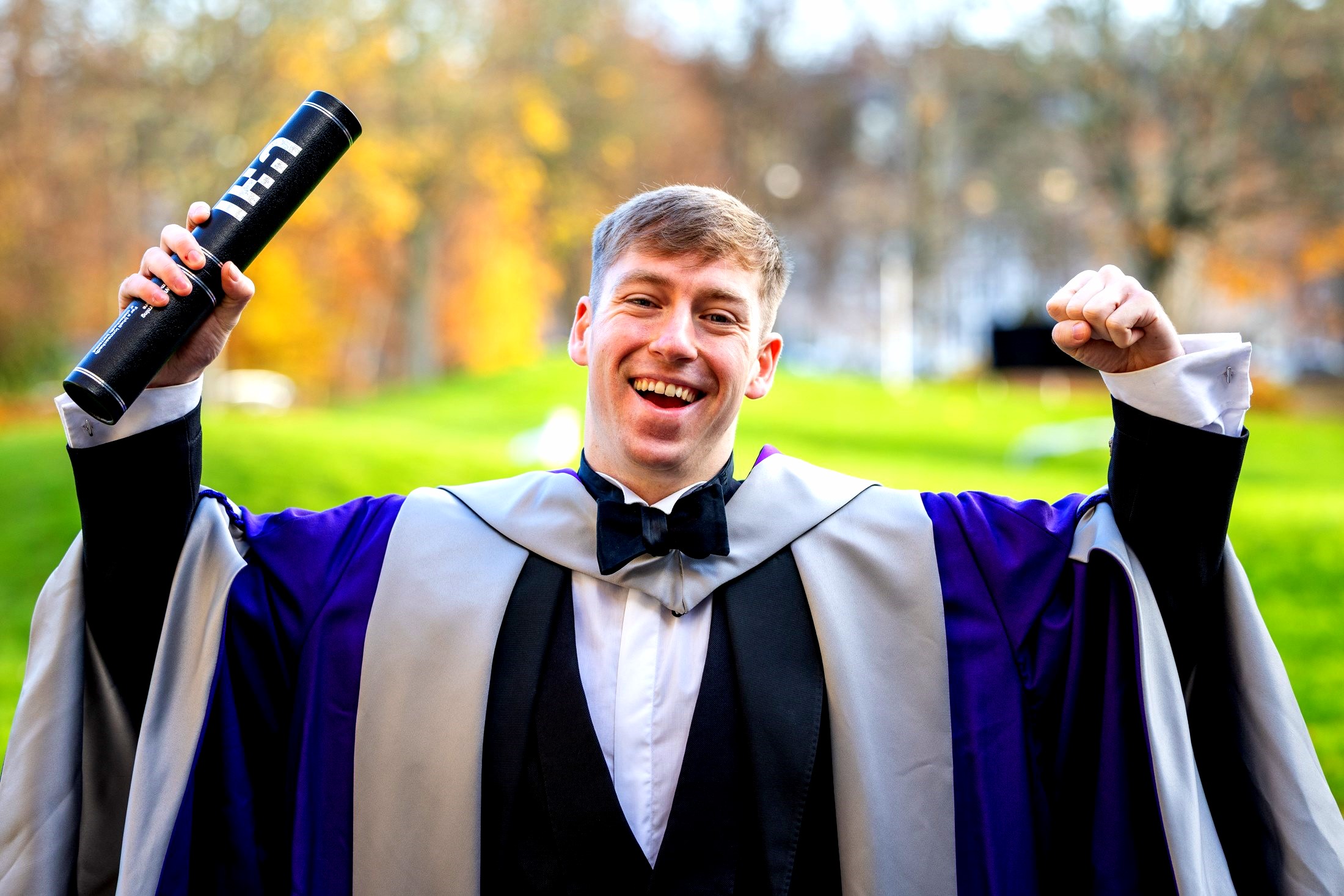
James’s doctoral research, which was funded by UHI Inverness, explored the effects of Eurasian beavers (Castor fiber) on freshwater fish communities, with a particular focus on interactions with migratory fish species, including Atlantic salmon (Salmo salar).
Combining innovative molecular techniques with traditional ecological approaches, his research used catchment-wide environmental DNA (eDNA) water sampling alongside targeted electrofishing surveys to investigate how beaver activity influences freshwater ecosystems. The project was co-supervised by NatureScot, with research partners including the Wild Trout Trust.
Recognising excellence in eDNA research
James’s PhD journey has been marked by several notable achievements. Most recently, he received the Best Student Presentation Award at the UKDNA Working Group Conference 2026, hosted by the University of Sheffield. His award-winning presentation explored the influence of seasonal environmental variation on eDNA transport distances.
His first PhD chapter was recently published in the Journal of Applied Ecology (eDNA sampling reveals no evidence of negative effects of beaver recolonisation on the catchment-scale distribution of migratory fish). This study utilised a catchment-scale eDNA approach to investigate the impacts of beaver presence on migratory fish distribution across Scotland’s largest wild beaver population in Tayside. They found no effects of the current beaver detections on the distribution of Atlantic salmon or lamprey but a positive co-occurrence with European eel at the catchment scale.
Research with impact beyond academia
James has actively contributed to wider conversations around biodiversity conservation and freshwater restoration. He featured in Beaver Trust’s documentary Balancing the Scales, which explores the complex relationship between beavers and migratory fish across Scotland, Norway and North America.
Produced by award-winning director Nina Constable and narrated by Dame Joanna Lumley, the documentary brought together research and perspectives from across the international conservation community. James also participated in a Q&A panel following the Inverness premiere at Eden Court and a subsequent panel at the Scottish Parliament Building in Holyrood.
Reflecting on the experience, James said:
“Taking part in this documentary was a great experience which allowed me to showcase my PhD research in a different format and engage with new audiences.”
James has also played an important role in supporting the next generation of conservation researchers through helping to organise five conferences during his PhD. In 2025, he organised the Scotland Nature Student Conference at the Royal Botanic Garden Edinburgh, in collaboration with NatureScot, the University of Edinburgh and the Royal Botanic Garden Edinburgh. The event brought together around 100 delegates and provided an opportunity for emerging researchers to share their work with academics, government agencies and conservation organisations. James also received the Best Talk Award at the conference for his research on the impacts of beaver recolonisation on migratory fish using eDNA analysis.
Celebrating research excellence
James’s graduation with a PhD represents an important achievement, not only for him but also for the Institute for Biodiversity and Freshwater Conservation and its wider research community. His work demonstrates the value of combining innovative molecular approaches with established ecological methods to better understand freshwater ecosystems and inform conservation management.
The Institute for Biodiversity and Freshwater Conservation at UHI Inverness warmly congratulates James on his PhD graduation and on his many achievements throughout his doctoral journey. We wish him every success in the next stage of his research career.