New DNA Study Sheds Light on Seabird Diets in Scottish Waters
Researchers from the Institute for Biodiversity and Freshwater Conservation (IBFC) at UHI Inverness have partnered with the British Trust for Ornithology (BTO) to uncover the diets of seabirds breeding on the west coast of Scotland using DNA metabarcoding.
Many seabird species are experiencing population declines, potentially driven in part by changes in food availability as sea temperatures rise. Understanding what seabirds eat is essential for predicting how environmental changes affect their survival and for developing effective conservation strategies to address their decline.
During the breeding season, BTO researchers collected faecal (scat) samples from kittiwakes and shags at breeding colonies. These samples were analysed at the IBFC laboratory at UHI Inverness using DNA metabarcoding techniques to identify prey species without disturbing the birds. The study detected 34 different fish species, as well as some marine invertebrates, demonstrating that scat sampling is a reliable and non-invasive method for investigating seabird diets. This pilot study highlights the potential of DNA-based approaches to provide detailed insights into seabird feeding ecology.
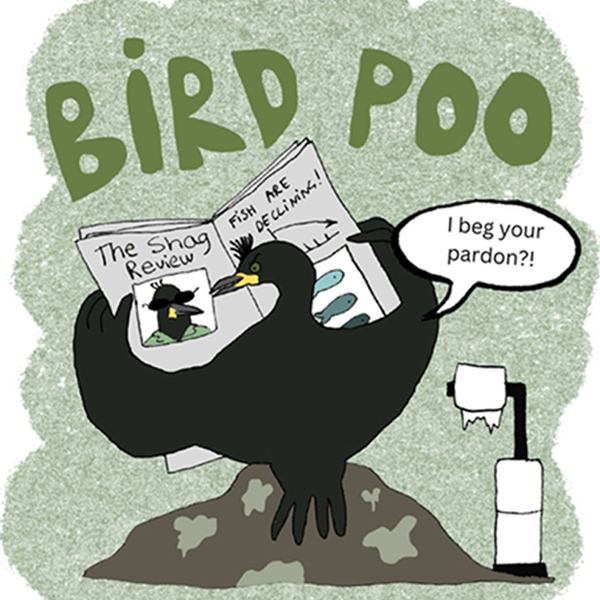
Based on the scientific research, BTO staff Nina O’Hanlon and Anna Dupont-Crabtree created a science comic to share the findings in a creative, accessible way. Using hand-drawn illustrations and humour, it makes complex results engaging for all ages and highlights how creative communication can enhance understanding of seabird ecology and climate change impacts.
Read the Seabird Poo Comic | Learn more, about the creative approach: The science and art of seabird poo | BTO